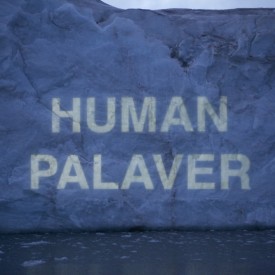




Today we saw a glacier. We see glaciers everyday, white rivers with windows into their depths, windows you could fall into, or out of. They rise like towers and tumble like twins into a salt sea – they will never be seen again. Those cliffs are solid time: frozen and woven stories from days before my own, we see in blue and bold. The years bend lines like memories bend years – folding in, and back, crowding, rolling, and thinning, in a blue vocabulary, like jazz. Hard like memory can be, and falling to pieces. We have seen glaciers like walls, stranding strong in front of our small ship.
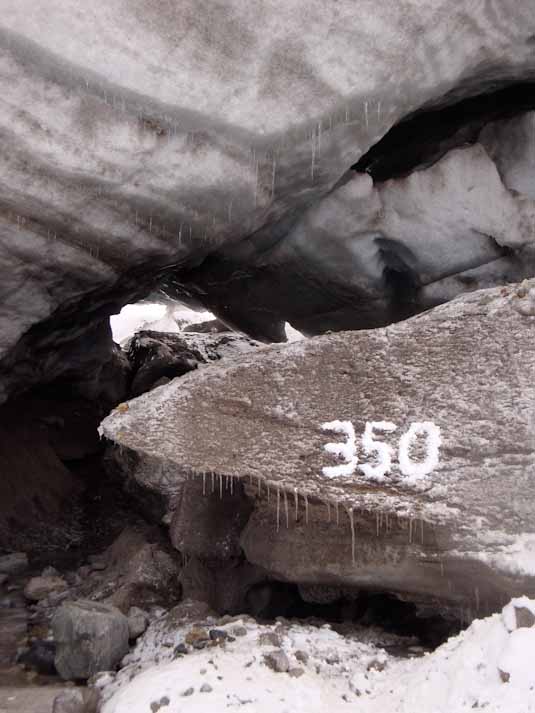
What we saw today was different, because we didn’t see it. We saw the space where a glacier should have been, where it was. It looked like a construction site – everything overturned and messy, bulldozed but unfinished. It was muddy, not frozen, and the dirt got everywhere. An arctic fox followed us for a time, glowing white on the brown rocks.
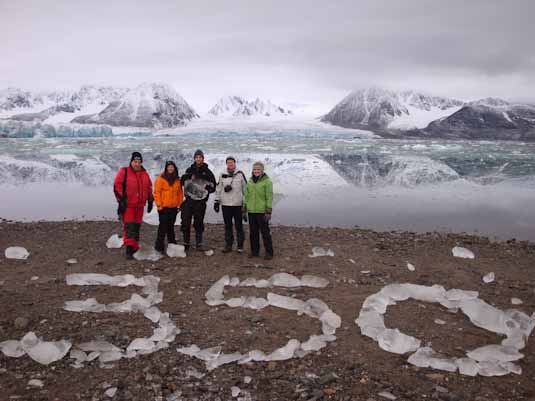
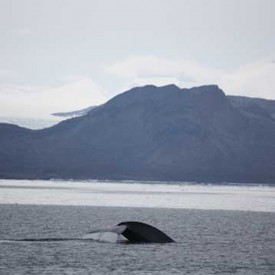
We have been sharing our photos of what is here, of the majesty of ice, of perfectly crafted animals, of white. We have been showing you what we see. What is more important is what we don’t see. You do not see what we do not see. The vast silences left behind the place where a nest should have been, the pristine white that paws should have trampled, the mirror ocean that should have been broken by a bold fin. The tragedies we have not seen because they are not there. The great disappearance.
In the blue bay, we watch the ice. It is a cross-section of the calendar of centuries. You can hear it collapse, the roar and echoes of a great nation of water, falling into the sea. But you don’t see anything, nothing changes, not even a ripple. Unseen destruction. Water flat as a mirror, reflecting the invisible air.